Productivity Stories & Updates

Read detailed case studies, background stories, and feature reviews directly from the product creators.

Tascii logo
By maestro Jun 24, 2026 About Tascii

Why we built Tascii - A game changer for creators

Tascii: Task Tracking That Stays Out of Your Way Introduction I built Tascii because every task manager I tried eventually just... got in my way. They were either bloated enterprise suites that demanded a login, two-factor auth, a stable connection, and complex onboarding before I could jot down a single to-do.... or they were so minimal they fell apart the moment a personal list grew into a real project with collaborators. I wanted something in the middle: fast, local-first, and quiet. A tool that opens instantly, works as easily on a plane as a beach, and never makes me think about the tool itself. So I made it. The Problem Most people who manage their own work face the same friction: their task tool is heavier than the work it's supposed to track. You lose your train of thought waiting for a board to load. You can't add a task because you're offline. Your "lightweight" app has slowly become a second job of grooming, tagging, and configuring. And the moment you want to bring in a teammate or sync between your laptop and phone, you're forced into a paid plan and a maze of permission settings. The overhead of staying organized starts to cost more than the disorganization it was meant to fix. The Solution Tascii flips the model: it's local-first, so everything lives in your app and responds instantly.... no spinner between you and your thoughts. Your data is stored on-device and syncs to the cloud quietly in the background, so the same boards follow you from one device to the next without you managing anything. It's offline-capable by design, installable as an app, and structured just enough to scale from a single checklist up to a multi-project, multi-person workspace.... without ever forcing that complexity on you when you don't need it. In short: the speed of a notepad, the structure of a real project tool, and none of the bloat. Key Features Local-first speed with cross-device sync: Tasks save instantly to your device and sync seamlessly in the background. Work offline on the train, pick up right where you left off on your phone.... no conflicts, no waiting. Flexible structure.... spaces, projects, and lists and boards: Organize work the way your brain actually does it. Drag-and-drop boards, custom statuses, and labels let you go from a flat list to a full pipeline in seconds, and back again. Rich docs and collaboration built in: Write real descriptions and notes with a proper markdown editor, drop comments, assign teammates, and invite collaborators.... all without bolting on a separate wiki or chat tool. AI-ready out of the box: Tascii ships with an MCP integration, so assistants like Claude can create tasks, move cards, and update projects on your behalf.... your task manager becomes something you can simply talk to. Braindump - Put a page full of random notes in, and get a structured plan and A->B tasks created automatically. (this is one of the 2 features that does require an internet connect, for the inference connection.) Conclusion Tascii is the task manager I always wanted: fast enough to trust with a fleeting thought, structured enough to run real projects, and calm enough to disappear when you don't need it. If you've ever quit a productivity app because it became the thing you had to manage, give Tascii a try.... open it, add your first task, and feel how quickly it gets out of your way. Ready to get organized without the overhead? Spin up your first board in Tascii today.

FlashAttach logo
By Blacksteel Digital Jun 23, 2026 About FlashAttach

Mail Merge Can't Send Different Attachments. FlashAttach Can.

Introduction It's payday. There are 180 payslips sitting in a folder, each one belonging to a different person, and they all have to go out today. Your mail merge tool handles the "Dear [First Name]" part fine — but it has no idea which PDF goes to whom. So you do what everyone does: open a new email, find the right file, attach it, send, repeat. One hundred and eighty times. And the whole time, one slip of the mouse means someone's salary lands in the wrong inbox. I built FlashAttach because I watched this exact scene play out for years. As an IT director, the "can you just send these out" requests always landed on the same overworked people in HR and accounting, burning an afternoon on work a machine should be doing — and quietly risking a data breach with every send. The tools that promised to fix it were bloated cloud platforms with monthly fees and a privacy footprint nobody wanted. So I wrote something that does one job, does it on your own machine, and gets out of the way. The Problem Here's the dirty secret of "mail merge": it personalizes text, not files. Need to send everyone the same newsletter with their name in it? Easy. Need to send each person their own invoice, payslip, certificate, report card, or contract? Suddenly you're back to manual labour. Every standard mail tool treats the attachment as a single file bolted onto every message — when what you actually need is a different file matched to each recipient. That gap costs you two things that matter: Time. Sending 200 individually-attached emails by hand is a half-day gone, every single cycle — and it's the kind of repetitive task that practically invites mistakes by hour two. Trust. Attach the wrong PDF once and you haven't just made a typo. You've shipped one person's financial or personal data to another. In the EU, that's not an "oops" — that's a reportable incident. The workarounds people resort to — VBA scripts that break, freelance macros nobody can maintain, or just accepting the manual grind — all share the same flaw: they're fragile, and they put the burden back on a human to never get tired. The Solution FlashAttach closes the gap between your recipient list and your folder full of files. You point it at your contact list and at your attachments. It reads the identifier you already use — a name, an employee ID, a VAT number, an invoice number — and automatically matches each file to the right person. Then it personalizes the subject and body, attaches the correct document to each message, and sends the whole batch through your own email account in one run. What used to be a 180-step afternoon becomes: load, check the preview, hit send. And because it's a desktop application — not a cloud service — your contact lists and sensitive documents never leave your computer. No uploading payroll to someone else's server. No per-email pricing. No subscription quietly draining your account every month. Your data stays yours. Key Features Smart attachment matching — FlashAttach pairs every recipient with their own file automatically, using an identifier from the filename or your contact list. No manual dragging, no wrong-file accidents. The right document reaches the right person, every time. Built-in PDF splitting — Got one giant combined PDF — a 200-page payroll export or a merged batch of invoices? FlashAttach splits it into individual per-person files for you, so a single export becomes a ready-to-send set in seconds. No separate tool required. Personalized bulk sending, on your terms — Merge fields in the subject and body, sent through your own SMTP/email account so messages come from you, not a third party. Everything runs locally for privacy, with a one-time licence instead of a monthly bill. Conclusion Sending personalized emails with the correct attachment shouldn't be an afternoon-long ritual that puts your data at risk. It should take minutes — and it should stay on your machine. FlashAttach is a one-time purchase (€299 + VAT), with no subscriptions and no cloud lock-in. Buy it once, run it on your own computer, and reclaim the hours you've been losing to manual attaching — without ever wondering whether the right file went to the right person. Stop attaching files one by one. Get FlashAttach today and send your next batch in minutes.

WishWarmly logo
By hsathi1 Jun 23, 2026 About WishWarmly

Why we built WishWarmly - A game changer for creators

It started with a VP who resigned on a Tuesday. By Wednesday morning someone had asked whether we were doing anything for her. By Thursday morning I had a link. By the end of the next week, forty people had written something and recorded video messages — real things, not "Best of luck!" things. The first version was not a product. It was a link that worked. What surprised me was how seriously people took it. Nobody knew it was built overnight. They assumed it was a professional tool, and they treated it like one. They wrote things they'd never say in a meeting or put in a Slack message. That's what WishWarmly is trying to protect: the conditions under which people write real things. Private contribution, no one copying anyone else, a format that feels worth the effort. The technology is straightforward. The hard part is making something that earns that kind of writing. What I actually built in a day I'm a weekend tinkerer with a full-time job. I didn't build a startup that Tuesday — I built a form that worked. The organizer enters a name and sets up the card. A link goes out. Contributors open it, type a message or record a short video, and submit. The organizer sees who's in. The recipient gets a link when it's ready. That was it. No landing page, no blog, no PDF, no AI transcription. Just the core loop: collect, review, deliver. I put a lot of hours into it. And apparently it showed — because nobody assumed it was a quick build. When I eventually told one of my engineers how it started, he was genuinely surprised. He'd assumed it was a real professional product with a team behind it. That reaction told me something: the bones were solid enough that people treated it like a real thing, because it felt like one. That core loop is essentially what WishWarmly still is today. Everything since has been making it better — the flip-book experience, the PDF keepsake, the AI transcription so video messages live in writing even after the video expires. But the bones were there in a weekend because the bones were simple. A form. A view. A link. The real reason I built it I wasn't solving a problem I'd read about. I was solving a problem I had every time someone handed me a virtual greeting card link. The experience was always the same. Open the link, see that fourteen people had already written something, realize I had nothing original to say, type something that vaguely fit the room, and close the tab feeling like I'd checked a box rather than done something meaningful. The "Happy Birthday! 🎂" at the top set the tone for everything that followed. And there was never a video option. Which felt like an enormous missed opportunity — because sometimes you don't want to write. You want someone to see your face when you say thank you. You want them to hear how you meant it. So when it was my turn to organize a card, I thought about sending another one of those links. And I couldn't. I'd signed too many of them and felt exactly nothing. So instead of using an existing tool, I just built one that worked the way I thought it should. What almost stopped me The honest version: time. Building a product on top of a full-time job is a specific kind of slow. Weekends, early mornings, the hour after everyone goes to sleep. There were moments where the rational answer was to stop — to ship the one card, let the moment pass, go back to normal. What kept me going was that I couldn't unsee it. Every virtual greeting card link I received after that felt worse by comparison. Now I knew what the experience could be. I'd seen forty people write something real and record video messages in a week, and I'd seen what the format had made possible. Stopping felt like knowing the better version existed and choosing not to build it. So I kept going on weekends. What WishWarmly is trying to be Not the biggest group card tool. Not the one with the most integrations or the lowest price. The one people reach for when the moment actually matters — when someone is leaving after ten years, when a teammate has a baby, when a VP who changed the direction of your career walks out the door on a Tuesday. Those moments deserve something that earns the writing — or the video. If you've got one coming up, start a card. It takes about twenty seconds to set up.

Tabby logo
By lejzer36 Jun 23, 2026 About Tabby

Why I built Tabby - A game changer for creators

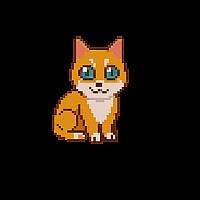
Introduction I created Tabby because the modern digital workspace has become cluttered and exhausting. We spend our days drowning in an endless stream of open tabs, constant notifications, and the relentless noise of the internet. I wanted to build a bridge between productivity and comfort—a tool that doesn't just manage your tasks, but also makes your browser feel like a personal space. Tabby is a pixel-art virtual companion designed to bring a sense of calm and intentionality back to your daily workflow. The Problem The primary challenge is digital overwhelm. Most users struggle with "tab fatigue"—having dozens of tabs open, leading to memory bloat, lost focus, and the anxiety of trying to remember why certain pages were left open in the first place. This clutter turns the browser into a source of stress rather than a gateway to productivity, making it easy to lose track of priorities amidst the digital noise. The Solution Tabby solves this by gamifying your focus. Instead of just another boring task manager, Tabby turns your browser into a living environment where your digital habits directly impact the well-being of your pixel-art pet. By organizing your tabs and closing unnecessary distractions, you "feed" and care for your companion. Tabby transforms the chore of digital cleanup into an engaging, rewarding experience, helping you maintain a cleaner, faster, and more peaceful browsing environment. Key Features Virtual Pet Care: Your Tabby companion grows and stays happy based on your browsing habits; maintain a lean tab count to keep your pet thriving. Intelligent Tab Management: Automatically group, suspend, or close inactive tabs to free up system memory and clear your visual workspace. Ad & Distraction Shield: Built-in lightweight blocking that removes aggressive ads and pop-ups, ensuring your browsing sessions remain focused and clutter-free. Conclusion Tabby is more than a utility—it is a companion for your digital life. By simplifying your workflow and adding a touch of personality to your browser, you can reclaim your focus and make every hour at your computer a little more enjoyable. Ready to de-clutter? Install Tabby today and see how much more you can accomplish when you aren't fighting your own browser.

Shipline logo
By johndoeroblox1212 Jun 23, 2026 About Shipline

ShipLine, simple deadline app to solve your forgetful pain

Introduction i kept forgetting my university assingments and exams so i decided to make this app to help me remember. The Problem you keep forgetting about tasks, keep waiting for tomorrow and have teams of people that are hard to manage on notion. The Solution shipline allows for you to set deadlines along with a calendar in order to keep track of what you might miss Key Features deadline: adjustable, editable deadlines to help you keep track calendar: set the dates of your tasks design your workspace:like notion you can drag and drop your workspace Conclusion Wrap up and add a call to action!

Cadence logo
By Cadence Jun 22, 2026 About Cadence

Why I built Cadence

It started with a whiteboard in the kitchen. I have fibromyalgia — chronic pain and fatigue that doesn't follow a schedule and doesn't respond to "just push through it." My capacity varies day to day in ways that are hard to predict and harder to explain. So I'd been using a whiteboard to keep track of things visually: tasks for the day, things my wife needed from me while she was out at work, stuff I was trying not to let fall through the gaps. The problem was that I had to be in the kitchen to see it. And if I wasn't in the kitchen, I'd forget the whiteboard existed. And then the tasks wouldn't get done. And because a lot of those tasks were things I was trying to do to take some of the burden off my wife while she was working full time and I wasn't — when they didn't happen, it created more strain than it relieved. I needed something that would come to me, not the other way around. Why I didn't just use an existing app I looked. There are a lot of productivity apps, and some of them are genuinely good. But they're mostly built for people who show up the same way every day — people for whom "just block out your time and stick to the schedule" is useful advice rather than a description of a life they don't have. The ones with more nuance were expensive. We're talking £20, £30, sometimes more per month, for features that might help if I stuck with them long enough to find out. I'm on disability benefits. That kind of outlay, on something that might not even work for how my brain and body actually function, wasn't something I could justify — and I knew I wasn't the only person in that position. A lot of people with chronic illness or similar conditions aren't in high-earning jobs. That's not a coincidence; it's a direct consequence of the thing the app is supposed to help with. So I built my own. The AuDHD bit I should be honest that my AuDHD isn't formally diagnosed — it's something I arrived at gradually, partly from reading and recognising myself in it, and partly from the slightly unsettling experience of meeting people for the first time who worked with autistic individuals or had family members on the spectrum, and who quietly clocked something in how I communicate before I'd mentioned anything. That's a specific kind of confirmation. It matters because it's another layer of variable capacity on top of the fibromyalgia — different in character, but with the same basic effect: the amount I can do, and how well I can do it, shifts in ways that a fixed daily schedule doesn't account for. What I actually wanted to build Something that asked "what do you actually have today?" before deciding what to put in your day. That treated low capacity as information to plan around, not a failure state to push through. That sent reminders to wherever I was rather than assuming I'd remember to check a list. That didn't lock every useful feature behind a subscription that assumed the person using it had disposable income. The core features in Cadence are free because they need to be free to be useful to the people they're designed for. The Pro tier exists to keep the lights on, not to hold the app hostage. Why it's just me One developer. No team, no investors, no growth targets attached to someone else's money. There are real limitations to that and I run into them regularly. But it also means the decisions about what to build aren't being made by people who don't live this. The privacy approach, the tone of the notifications, the fact that pain level is a first-class option alongside energy and focus — those came from actually needing them, not from a feature matrix. There's a version of this app that a wellness startup would build. This isn't it. If it helps, I'm glad. If something's wrong or missing, the feedback button in the app comes straight to me — no support ticket queue, no bot. Just me, reading it.

NestBoard logo
By NestBoard Jun 16, 2026 About NestBoard

NestBoard: Turn a Screen You Already Own Into Your Family's Command Center

Introduction NestBoard started with a simple want. My wife asked for one of those smart family calendars for the kitchen. I looked at the price, looked at a spare computer sitting in my closet, and thought, why buy a screen that does less than the hardware I already own? So I built NestBoard instead. What began as a kitchen display for one household turned into a full family command center, and I kept adding the tools my own family actually needed as we used it. The Problem In most households, one person carries the entire mental load. The appointments, the practice times, who has pickup, what is for dinner, whose turn it is for chores. The family group chat does not fix it. A shared calendar does not fix it either, because the kids never open it and the other adult checks it sporadically. So the schedule lives in one person's head, and that person spends their day being the family's walking calendar. On top of that, the apps that promise to help usually want a monthly subscription and a brand new device to run on. The Solution NestBoard turns a screen you already own into your family's command center. That old tablet in a drawer, a spare laptop, a monitor you stopped using, any of them becomes the one place your whole household runs on. Put it on the kitchen wall and everyone sees the same calendar, chores, meals, and reminders at a glance. No new hardware to buy. No ads. No clutter. Just a calm, shared view of everything happening in your home, synced to every phone in the house so the information travels with you. Key Features Shared family dashboard: Calendar, chores, meals, grocery lists, reminders, and routines all live on one board the whole household can see, on the kitchen wall and on every phone. Recycle hardware you already own: Sign in on a spare tablet or laptop, turn on kiosk mode, and it becomes an always-on family display with a photo slideshow when idle. No dedicated smart-display purchase required. Robin, your in-app assistant: Robin helps in plain language. Tell it "soccer practice Tuesdays at 5" and it lands on the calendar. Forward an event and it adds it for you, then tells you exactly what it did. Conclusion NestBoard is built for families who want fewer apps, less nagging, and a calmer way to keep everyone on the same page, without buying another gadget to do it. One household, one flat price, every screen in your home in sync. Try NestBoard free and turn a screen you already own into the place your family's life runs on. Get started at https://mynestboard.com.